 i i
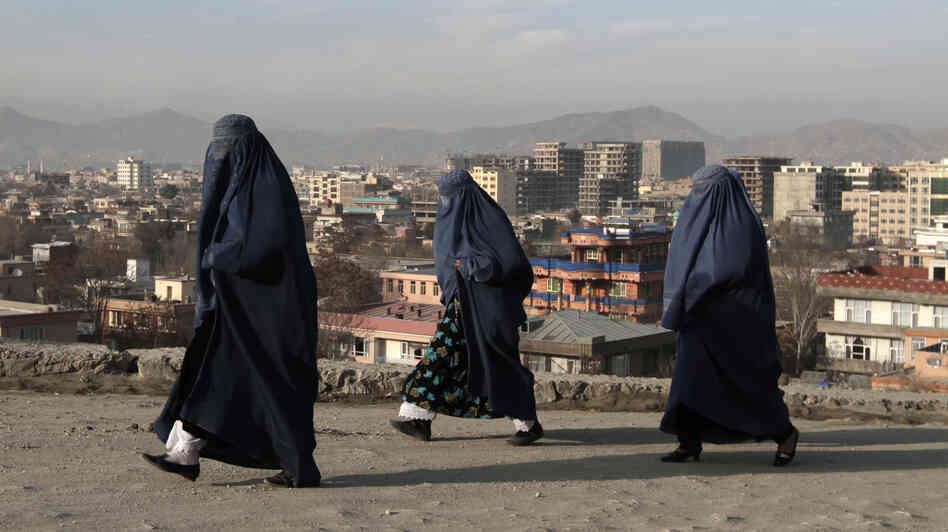
i ihide captionAfghan women walk along on the street in Kabul, Afghanistan, last week. The country faces many changes next year, including a presidential election and the withdrawal of U.S. combat forces. There are also concerns that advances made by women over the past decade could be in jeopardy.
Rahmat Gul/AP<img data-original="http://media.npr.org/assets/img/2013/12/26/afghanistan-2014-2_wide-46cdc8a93e0204e746edf541c97943293395ebcb-s40.jpg" title="Afghan women walk along on the street in Kabul, Afghanistan, last week. The country faces many changes next year, including a presidential election and the withdrawal of U.S. combat forces. There are also concerns that advances made by women over the past decade could be in jeopardy." alt="Afghan women walk along on the street in Kabul, Afghanistan, last week. The country faces many changes next year, including a presidential election and the withdrawal of U.S. combat forces. There are also concerns that advances made by women over the past decade could be in jeopardy."/>
Afghan women walk along on the street in Kabul, Afghanistan, last week. The country faces many changes next year, including a presidential election and the withdrawal of U.S. combat forces. There are also concerns that advances made by women over the past decade could be in jeopardy.
Rahmat Gul/AP
To many Afghans, 2014 is more than a year, it's a sword of Damacles hanging over the fragile nation. It's the year the country will elect a successor to President Hamid Karzai and the U.S.-led military mission will end. Many fear that will open the door to chaos.
But on a chilly winter day in Kabul, it's still business as usual in the city center.
In a stationary market, you can still buy calendars for this year – the year 1392. Afghanistan uses the Persian solar calendar, and in March the year 1393 begins.
But for Afghans like shop owner Mohammad Kabir, it's the number 2014 that counts.
"I've got a weird feeling when I see and think about 2014. I don't know what will happen," said Kabir. "I hear fear amongst the people about next year."
Shabir Shakeri, 21, is a part time designer in a nearby printing press.
"Of course it'll be an important year. It depends on the security and political transition and whether people elect someone good," Shabir said. "If not, I'm afraid that we might return back to the dark days."
2014 has taken on an almost mythical stature. Many Afghans complain the media is stoking fear by focusing on worst-case scenarios of civil war or a return of the Taliban.
 i i
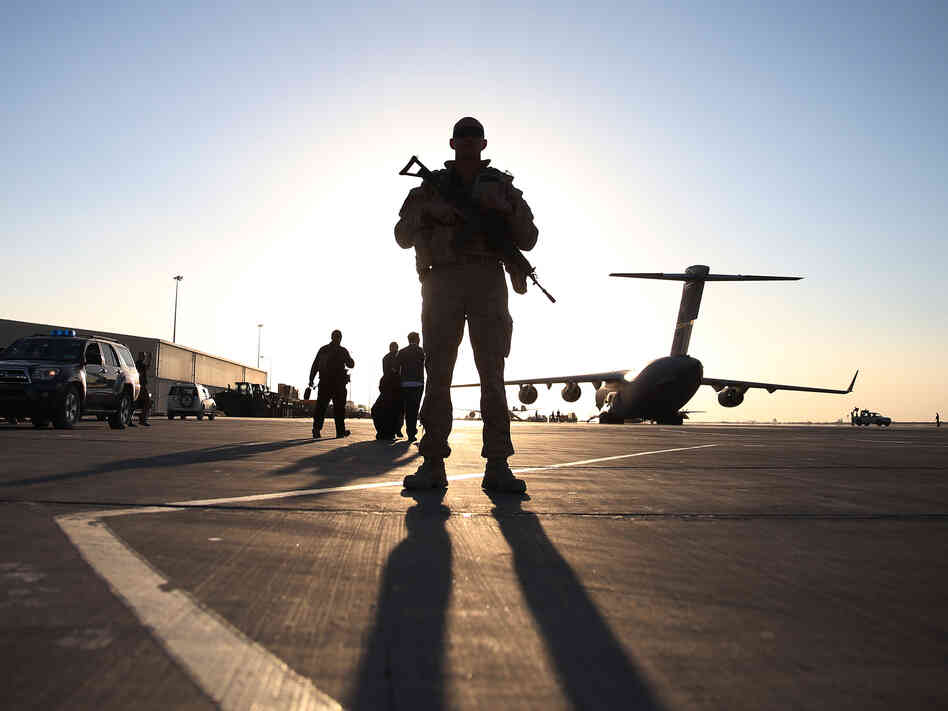
i ihide captionA member of the U.S. armed forces stands guard near a C-17 military aircraft in the southern city of Kandahar on Dec. 8. The U.S. still has about 50,000 military personnel in Afghanistan, but most will be withdrawn next year.
AFP/AFP/Getty Images<img data-original="http://media.npr.org/assets/img/2013/12/26/afghanistan-2014-1-1d7eba687f0f3cd0ba3c3a368d88e84cb6d4a0ae-s40.jpg" title="A member of the U.S. armed forces stands guard near a C-17 military aircraft in the southern city of Kandahar on Dec. 8. The U.S. still has about 50,000 military personnel in Afghanistan, but most will be withdrawn next year." alt="A member of the U.S. armed forces stands guard near a C-17 military aircraft in the southern city of Kandahar on Dec. 8. The U.S. still has about 50,000 military personnel in Afghanistan, but most will be withdrawn next year."/>
A member of the U.S. armed forces stands guard near a C-17 military aircraft in the southern city of Kandahar on Dec. 8. The U.S. still has about 50,000 military personnel in Afghanistan, but most will be withdrawn next year.
AFP/AFP/Getty Images
So Many Uncertainties
But there are realities that can't be denied. There will be fewer foreign troops, there will be less international aid, the Taliban vow to disrupt the presidential election in April.
And there's still the question of whether any foreign troops will remain in Afghanistan after 2014 to continue much needed training of Afghan forces.
Shaker Safdari, 46, who owns a printing press in Kabul, says his business is down 80 to 90 percent this year.
All the people we spoke with in the market say their businesses dropped substantially in 2013. The real estate market is in decline. The currency has lost 10 percent of its value.
"The business people, to some extent, they have stopped their investments in Afghanistan," said, Mohammed Salem Omaid, the deputy CEO of Azizi Bank, the largest commercial bank in the country.
On top of that, he said many bank customers are holding cash at home and not depositing it at the moment.
"A businessman can deal with good market or bad market," said Mohammad Qurban Haqjo, head of the Afghan Chamber of Commerce. "But, a businessman can never deal with a uncertain market."
Over the past year, more than 4,000 companies closed, he said. And many of those that remain open are looking at other markets.
 Parallels
 U.S. Military Lingo: The (Almost) Definitive Guide
"They are taking their cash in Dubai, or elsewhere," said Haqjo.
 The Sunday Conversation
 U.S. Lawyer Works To Change The Afghan Legal System
With consumers buying less, imports are down and customs revenue has dropped 30 percent. Add to that the decrease in foreign aid next year, and there is the potential for a perfect economic storm.
Women's Rights At Risk
 Afghanistan
 When Most U.S. Forces Leave Afghanistan, Contractors May Stay
It's not just the economy that's in danger. Women fear a loss of the gains they have made since the fall of the Taliban in 2001.
"We have seen an increasing trend of women's rights violations," said
Fawzia Kofi, a female member of parliament.
She said the stress and anxiety of the uncertain environment and growing economic challenges are leading to more domestic violence. And, parliament, she says, is turning hostile as well.
"Some of the more conservative (members) have become more open-mouthed against women," she said.
In another sign of 2014 anxiety, Kofi says that many of her colleagues are working on exit plans in case things go south next year.
But, 74-year-old shopkeeper Abdul Jabbar has seen the worst of times in Afghanistan, and he says he's not worried about next year.
"We've always relied on God," he said, adding that 2014 "can't change our destiny."

via Smart Health Shop Forum http://feedproxy.google.com/~r/SmartHealthShopForum/~3/Y-JU7XFGC0w/16551-facing-big-changes-anxious-afghans-hope-best-2014-a.html
No comments:
Post a Comment